UPS Power Protection
Immediate battery-backed power when the mains supply fails.
Power Continuity · Critical Power Systems
Keep your critical systems running when the mains supply fails.
Power Continuity designs, supplies, installs and maintains No Break Power Protection systems, combining UPS power protection, standby generators and automatic transfer equipment for organisations that cannot afford unexpected downtime.
From data centres and manufacturing facilities to IT infrastructure and mission-critical environments, we provide resilient power solutions throughout the UK.
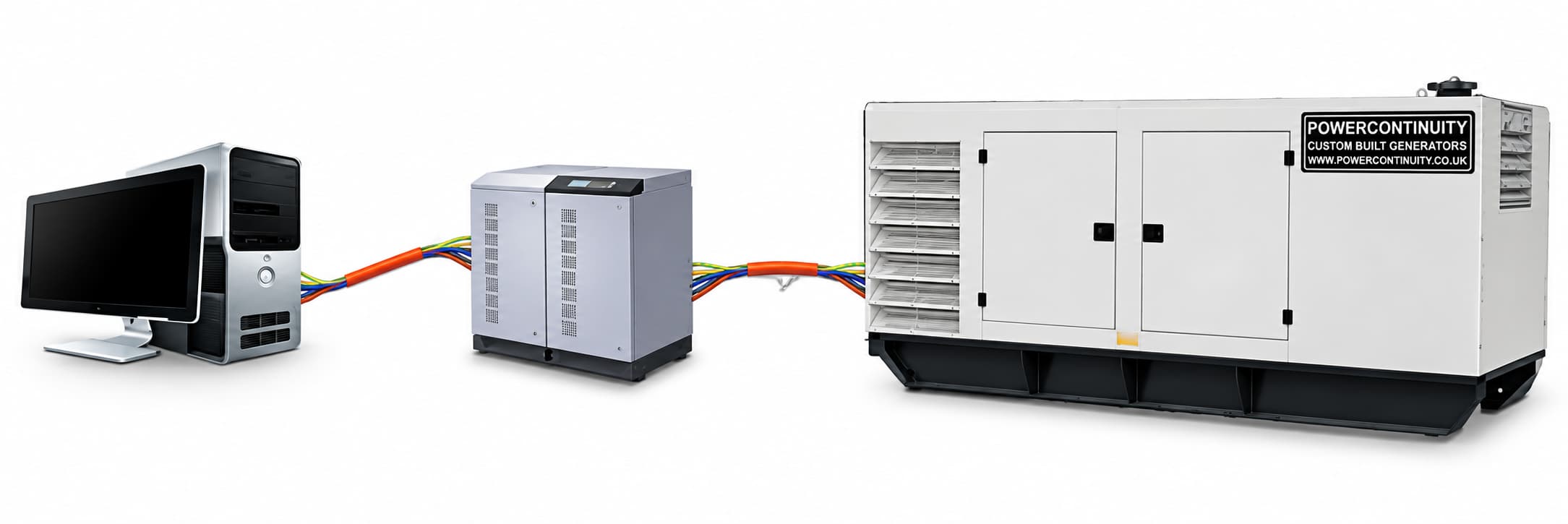
No Break Power Protection is designed to keep critical electrical equipment operating when the mains electricity supply becomes unstable or fails. A complete system typically combines a UPS, batteries, standby generation and automatic transfer equipment.
The UPS provides immediate protection, while the generator provides longer-duration backup once it has started and stabilised. The complete system is designed around the equipment that must remain operational.
Immediate battery-backed power when the mains supply fails.
Extended emergency power during longer outages.
Controlled switching between mains and standby power.
Stored energy to support the critical load during generator start-up.
Visibility of system status, operating conditions and faults.
Planned servicing and testing to help maintain system reliability.
A correctly designed system coordinates the UPS, standby generator and electrical switching equipment automatically.
Mains electricity supplies the site while the UPS protects connected critical equipment.
If the supply fails or moves outside acceptable limits, the UPS supports the protected load using stored battery energy.
The standby generator starts automatically while the UPS continues supplying the protected equipment.
Once generator voltage and frequency are stable, transfer equipment supplies the UPS from the generator. The UPS continues supporting its protected load.
After the mains supply is confirmed as stable, the system transfers back. Batteries recharge and the generator completes its cool-down and shutdown sequence.
Even a short power interruption can cause disruption that lasts far longer than the outage itself. Protecting essential loads helps reduce uncontrolled shutdowns, lost production and lengthy restart procedures.
Maintain power to servers, networks and communications equipment.
Protect selected manufacturing controls, machinery and automation against sudden power loss.
Reduce the risk of interrupted processes, corrupted data and uncontrolled shutdowns.
Keep protected CCTV, access control and security equipment operational.
Help avoid unnecessary disruption and extended restart procedures.
Coordinate critical power equipment around the needs and risks of your site.
A standby generator requires time to start and stabilise. A UPS bridges that gap, maintaining power to the protected load while the generator becomes available.
The UPS is selected according to the actual critical load, required battery runtime, future growth and redundancy. Power Continuity designs systems for individual critical loads through to parallel and redundant installations.
Generator sizing considers the electrical installation, UPS characteristics, motor starting currents, future expansion and required runtime. Correct coordination with the UPS is essential.
Transfer equipment controls source selection. Automatic Mains Failure controls detect mains failure and initiate the standby sequence. Their precise functions depend on the installation and control strategy.
Redundancy provides capacity beyond the minimum needed to support the critical load. The appropriate arrangement depends on your infrastructure and the consequences of power loss.
The capacity required for the load, plus one additional redundant unit or module.
If three equal UPS modules are needed, four can provide N+1 capacity, allowing one module to become unavailable while sufficient capacity remains.
The required capacity plus two additional redundant units or modules.
This provides further equipment redundancy, subject to the design of the complete system.
Two independent systems, each capable of supporting the full critical load.
Effective resilience also depends on distribution, transfer arrangements and the equipment receiving the power.
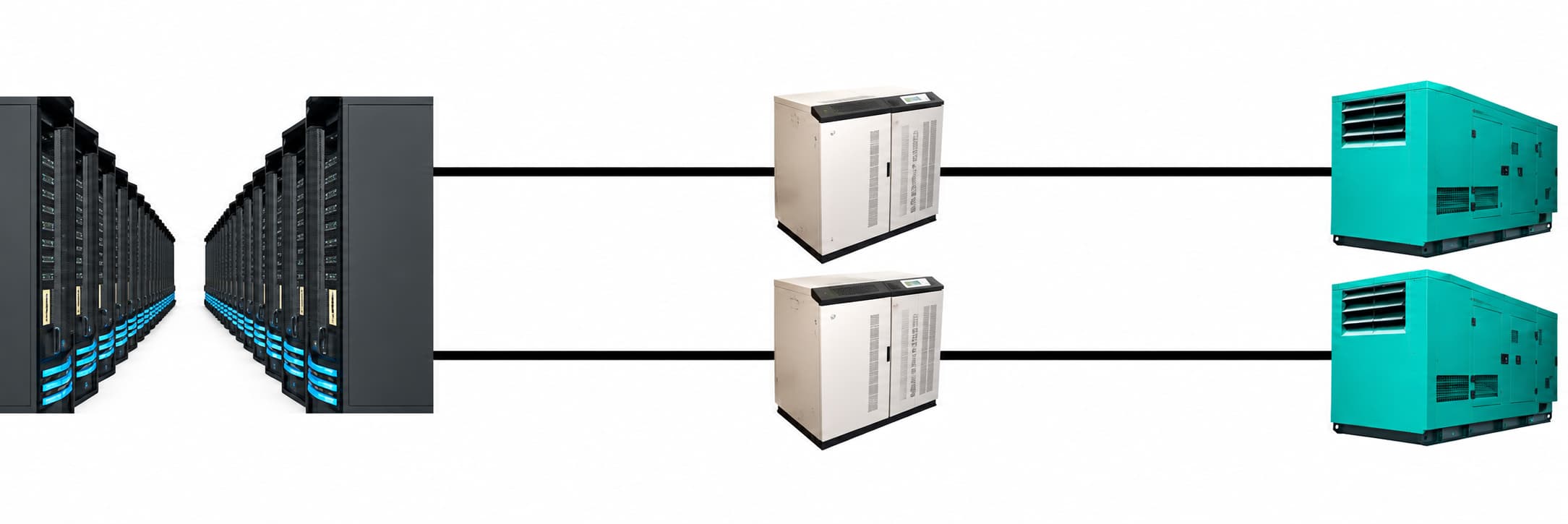
Redundant UPS equipment does not automatically make the entire site resilient. Single points of failure may remain elsewhere in the power path.
Power Continuity assesses the complete infrastructure to identify weaknesses and design around the level of resilience your organisation requires.
Required runtime depends on the connected load, battery capacity and condition, generator start-up arrangements and business continuity needs.
Batteries must support the load throughout the planned start and transfer sequence, with appropriate margin. Some sites require longer battery autonomy.
Fuel capacity depends on generator load, required outage coverage and refuelling arrangements.
Stored diesel should be monitored for water, sediment and microbial contamination. Fuel testing, filtration and polishing may form part of the maintenance programme.
Servers, storage, networks and communications depend on continuous power. Systems may incorporate redundant UPS capacity, standby generation, A and B feeds, monitoring and planned testing.
We support new installations and upgrades to existing infrastructure.
View our Data Centre Support →Unexpected outages can stop processes, waste products and create automation faults.
UPS systems can protect selected PLCs, controls and IT equipment while standby generation supports essential site loads. Systems are designed around the equipment being protected.
Momentary interruptions can restart servers, network switches and telecommunications equipment.
UPS protection maintains power to selected IT, CCTV, access control and communications loads. Standby generation extends protection during longer outages.
Installing standby equipment does not prove that it will perform correctly during a mains failure. A planned testing programme helps identify faults before emergency operation is required.
Check operating condition, alarms and associated controls.
Assess battery condition and identify deterioration that could reduce runtime.
Check starting, operation and associated controls.
Verify the response to loss and restoration of mains power.
Assess the coordinated UPS, generator and transfer sequence.
Apply a controlled load to assess generator performance under working conditions.
A planned simulated outage helps verify the complete sequence: mains failure, UPS support, generator start, transfer, generator operation and mains restoration.
Testing should be carefully planned and risk assessed, particularly for live critical sites.
A successful unloaded start does not prove that a generator can support the required load.
Load-bank testing assesses performance under controlled load. It complements testing of the actual site transfer and distribution arrangements.
UPS systems, batteries, generators, fuel systems and switchgear require maintenance throughout their operating life. Service frequency and tasks should reflect manufacturer recommendations, operating conditions and site criticality.
Additional services can include fuel testing and polishing, ATS checks, switchgear inspection, mains failure testing and load-bank testing.
Before specifying equipment, our engineers assess the critical load and the complete power requirement.
This assessment allows the UPS, generator and electrical infrastructure to be designed around the actual needs of your site.
Power Continuity specialises in critical and emergency power infrastructure, supporting UPS systems, standby generators and associated equipment throughout the UK.
UPS systems, generators, batteries, switchgear and fuel management are considered as part of a coordinated solution.
Support from initial assessment and design through installation, commissioning and ongoing maintenance.
New projects and existing installations requiring upgrades, replacement or greater resilience.
Critical power engineering and support for organisations throughout the UK.
A coordinated system designed to keep protected critical electrical equipment operating when mains electricity becomes unstable or fails. It typically combines a UPS with standby generation and automatic transfer equipment.
No. A UPS provides immediate power from stored energy, typically batteries. A generator produces electricity using an engine and needs time to start and stabilise. The UPS bridges that interval.
They are commonly used together where equipment must remain powered without interruption and extended backup is required. The right arrangement depends on your load, runtime requirements and operational risks.
Enough capacity for the critical load plus one additional redundant unit or module. Sufficient capacity remains if one unit becomes unavailable, provided the system is designed and operated accordingly.
N+1 adds one redundant unit or module above required capacity. 2N provides two independent systems, each sized for the full load. Overall resilience depends on the complete electrical architecture.
Runtime depends on connected load, battery capacity, UPS design and battery condition. Battery autonomy is specified around the needs of the site and any standby generator arrangement.
Starting alone does not demonstrate performance under load. Load-bank testing applies a controlled electrical load to assess generator operation and help identify problems before an emergency.
Often, subject to a site assessment. Options may include greater capacity, improved redundancy, longer battery autonomy or removal of weaknesses. Compatibility, space and electrical infrastructure must be reviewed.
If your organisation cannot afford unexpected power interruptions, speak to Power Continuity.
Whether you need a new UPS, standby generator, redundancy upgrade or system testing, our engineers can assess your infrastructure and recommend an appropriate approach.